

Spending an Afternoon at the Armstrong Heritage Museum
Plenty of small towns keep their history in scattered places. A shoebox of photos in the hall closet. A plaque nobody stops to read. A story an uncle tells every Thanksgiving, a little different each year. Armstrong went about it more deliberately. Since 1989 the Armstrong Heritage Museum has pulled those loose pieces together on 6th Street, and you can walk through more than a century of local life in one unhurried afternoon. That slowness is sort of the point.
A Small Building With a Long Memory
A lot of what the museum remembers is pretty ordinary, which is exactly what makes it worth the trip. Town life used to run on the Opera House, the train depot, the Fourth of July parade and a card table pulled out in somebody's kitchen on Saturday night. Those habits didn't really disappear. They changed shape. The friendly penny-ante game moved onto phones years ago, to sites like spinanzia casino, and the memory of how it all used to look ended up in places like this one.
The museum opened in 1989, four years before Armstrong threw its centennial celebration in 1993. It took over the old Gaarde-Tietje Insurance building, which feels right for a town that tends to reuse what it already has. The collection mixes things from Armstrong's own past with historical pieces of broader interest. Expect at least one moment of "my grandmother had one of those."
A heritage museum in a town this size isn't really a vault. It's closer to a family album the whole community agreed to keep up.
Finding the Heritage Museum on 6th Street
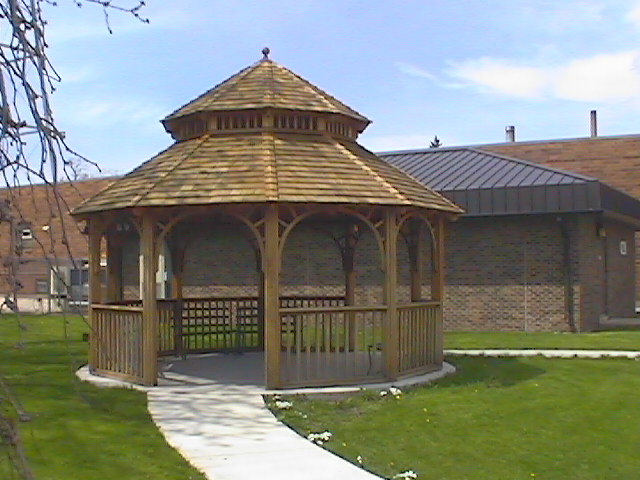
It's on 6th Street. Nobody in town really calls it that, though; it's Main Street to pretty much everyone. Find the wooden gazebo and you've basically found the museum. The Annex, the newer building, is tucked right behind the gazebo, and the old playhouse display sits in the gap between the two, so you end up walking a little loop instead of going in and out the same door.
Along that same stretch you'll pass the James Larsen Memorial Sitting Park (a couple of benches, some shade, nothing fancy), which is a decent place to sit for a minute before or after. Plan on the visit going long. Somebody always ends up telling a story about one of the old photographs, and you'll want to hear how it ends.
Reading Armstrong's Timeline Up Close
Some background helps. The town's history page on this site leans on a 1993 book, Remembering Armstrong: A Centennial History, and its list of dates runs all the way from a trapper in 1856 to the museum itself. I pulled five that tend to come up a lot once you're standing inside the heritage museum.
| Year | Milestone | Why It Matters |
|---|---|---|
| 1856 | Thomas Armstrong arrives to trap | The grove, and later the town, carried his name |
| 1893 | Town of Armstrong incorporated | Came a year after the first locomotive arrived |
| 1903 | Opera House opens | The main gathering place until 1960 |
| 1939 | First swimming pool opens | Start of a long pool tradition in town |
| 1989 | Heritage Museum founded | One home for the town's scattered memory |
Volunteers tend to light up when you ask about something specific instead of "so what's here?" If someone is on hand, these topics usually get a good conversation going:
- The Opera House (1903 to 1960, then torn down so City Park could grow)
- That old railroad depot, gone since 1964
- The brick school from 1916, and what happened to it later
- Art's Way, whose first plant was right downtown in 1956
- Fourth of July celebrations, going back to 1872 if you can believe it
- The 1993 centennial and the book put together for it
You don't need to know any of this going in. Honestly, the best part is when two people disagree about it, whether it was '63 or '64 when the depot came down, or whose uncle that is on the parade float. Let them argue it out. You'll pick up more that way than from any label on a display case.
Planning an Unhurried Visit
Hours are short, so a bit of planning goes a long way. The details below come from the museum's page on this site, which reflects the original listing. Call before you drive in, especially in winter, when the weather can change everyone's plans.
| Visit Detail | What the Museum Page Lists | Practical Tip |
|---|---|---|
| Regular hours | Wednesdays, 1 pm to 3 pm | Show up early; two hours goes fast |
| Event days | Open most, including Memorial Day | Pair your visit with the day's events |
| Appointments | Call (712) 868-3470 | Ask ahead if you're coming from out of town |
| Location | Main Street (6th), next to the gazebo | Gazebo first, then just wander |
A two-hour window on a Wednesday doesn't leave much slack, so it's worth stacking a few other stops around it:
- Sit for a while at the James Larsen Memorial Sitting Park
- Walk over to the Veterans Brick Memorial in City Park, built in 2011
- Drop by the public library, founded back in 1945
- Bring an older relative along, since they often know the stories behind the objects
- Take a look at the playhouse display before you leave
- Nine holes at Country Greens afterward, weather permitting
Got kids along? The playhouse will buy you a few minutes, maybe more, and the gazebo works for that too. Wear shoes you don't mind walking in. That's about all the prep it takes, really.
Why a Heritage Museum Still Matters Here
The 2020 Census put Armstrong at 875 people. That's not many, and in a town that small a lot of history lives in exactly one person's head. Somebody's grandpa knows why a certain corner lot sat empty for twenty years. Once he's gone, so is the answer, unless it got written down or dropped off at the museum first.
Every object that makes it into the museum is one less story that depends on a single person remembering it.
Think about your own phone for a second. Thousands of pictures, and in fifty years nobody will know who half those people are. A small museum run by volunteers is kind of the opposite. Fewer things, sure, but each one has a name and a date penciled on it, and somebody decided it was worth the shelf space.
So no, the Armstrong Heritage Museum isn't a full-day trip. You're looking at a modest building, an annex, a playhouse and a gazebo on Main Street, all kept running by volunteers who clearly care whether the dates are right. Swing by on a Wednesday afternoon, or call and set up a time. Ask about the Opera House. Odds are you'll walk back out onto 6th Street and look at the storefronts a bit differently than you did on the way in.